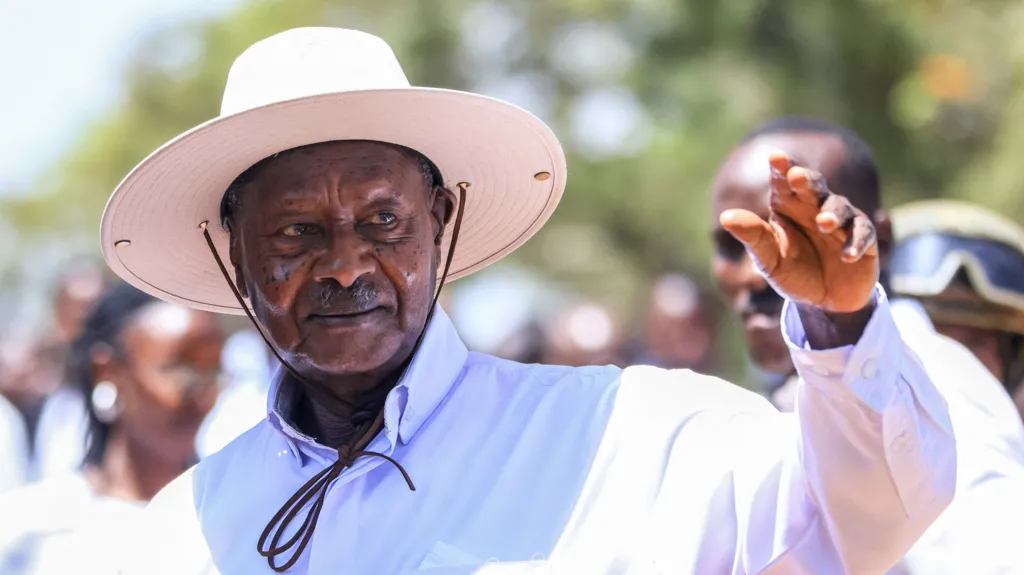
Kampala: Uganda’s long-serving leader Yoweri Museveni has been declared the winner of Thursday’s presidential election, extending his rule beyond four decades and setting the stage for another five years in office. The announcement, made by the national electoral authorities, immediately triggered rejection from the opposition and intensified scrutiny from human rights groups and international observers.
According to official results, Museveni secured 72 percent of the vote, while his closest challenger, Bobi Wine, received 25 percent. Wine dismissed the outcome as fraudulent and accused authorities of ballot manipulation, claims the government has neither acknowledged nor addressed publicly. Despite the tension, the opposition leader urged supporters to pursue non-violent demonstrations.
The Ugandan election has once again highlighted deep divisions within the country’s political landscape. Museveni, now 81, first rose to power in 1986 after leading a rebel movement. Since then, he has repeatedly won elections, reshaping the constitution along the way to remove term and age limits. Supporters credit him with delivering relative stability, while critics argue that prolonged rule has weakened democratic institutions.
The vote was conducted amid reports of violence and heavy security deployment across several regions. Opposition figures allege that at least 21 people were killed in election-related incidents, although authorities have confirmed seven deaths so far. Independent verification has been difficult because nationwide internet access was suspended days before voting, a move officials said was necessary to curb misinformation and unrest.
International concern grew after the United Nations human rights office described the internet blackout as deeply troubling. Opposition leaders demanded immediate restoration of online access, arguing that it limited transparency and curtailed citizens’ rights to information. Government officials, however, maintained that the restrictions were temporary and aimed at preserving public order.
Tensions escalated further when Wine’s party claimed that security forces attempted to detain him at his residence in Kampala overnight. Police denied the allegation, stating instead that access around the area had been restricted due to security concerns. Wine later said he had avoided arrest and was in hiding, after earlier claiming he was under house arrest.
Throughout the campaign, Wine positioned himself as the voice of a youthful population in Uganda, where most citizens are under 30. He pledged to fight corruption and introduce wide-ranging reforms. Museveni, by contrast, argued that his leadership remains essential to maintaining stability in a nation with a history of political upheaval.
With voter turnout reported at 52.5 percent and six other candidates each receiving less than two percent of the vote, the Ugandan election outcome is likely to keep the country in the international spotlight. As protests loom and legal challenges are anticipated, the next phase will test whether Uganda can navigate post-election tensions while addressing long-standing questions about governance, accountability, and democratic renewal.